



What does volatility mean in slots? Decoding your winning potential
Table of Contents
Two slot games can have similar RTP figures yet behave very differently over a playing session. One might return frequent small wins around the size of your stake, while another can go much longer without a meaningful payout before producing a larger result.


That difference is largely explained by volatility. The easiest way to answer the question “What does volatility mean in slots?” is that volatility describes how a slot distributes any potential winnings to players. Lower volatility generally means smaller wins occur more often, whereas higher volatility places more of the game’s payout potential into less frequent, larger results.
Understanding the volatility meaning in slots does not let you predict the next spin, as individual outcomes remain random, based on RNG. Volatility instead gives you an idea of how sharply your balance may move and what type of payout pattern the game is built around.
The Core Definition: What Exactly is Slot Volatility?
Imagine two slots both advertising a theoretical RTP of 96%. Game 1 could produce regular returns around the original stake while allocating relatively little of its payout model to very large wins. Game 2, on the other hand, could devote more of its theoretical return to rare bonus outcomes worth a much larger multiple of the stake size. Their long-term RTP may be identical, but their volatility is not.
The volatility in slots meaning covers how payout values are distributed across the game. High volatility points towards larger balance swings and a greater chance of extended periods without substantial returns, and low volatility places more of the game’s return into smaller payouts.
Volatility is not the same as hit frequency either, as a slot can register many winning spins while remaining volatile if plenty of those wins are below the original stake and much of its payout potential sits inside rare features. A “winning spin” only means the game recorded a payout, not that the payout exceeded the stake used for that spin.
For players browsing the online slots ontario available with us at ToonieBet, that distinction gives more useful information than simply asking whether a game appears to pay often.
The 5 Levels of Slot Machine Volatility
Some providers use their own broad volatility bands, while others provide more detailed ratings of what players can expect when spinning their titles. Here are the 5 most common levels of slot machine volatility:
Low Volatility

With a low volatility slot, players can expect more of the payout model to appear through relatively frequent, modest wins.
So, what does low volatility mean in slots from a practical perspective? Your balance may move in smaller increments than it would on a highly volatile game, although no individual session is guaranteed to follow that pattern. Even low-volatility slots can produce losing runs, just as with any online casino game.
The trade-off often appears near the top of the paytable, due to lower-volatility games tending to place less emphasis on extremely rare, large potential payouts or jackpots.
Low-Medium Volatility
Move slightly further along the scale and larger wins begin to carry more weight. Low-medium slots can still produce regular base-game activity, but balance swings may be sharper than on clearly low-volatility titles. A bonus round might account for more of the game’s payout potential without dominating the mathematical model entirely, for example.
Medium Volatility
Neither end of the payout distribution dominates in this type of game. A medium-volatility slot generally combines smaller base-game returns with access to less frequent payouts of greater size. Dry periods can happen, and a feature can still produce a large win, but the model is not weighted heavily towards either extreme.
Medium-High Volatility
Longer stretches with limited returns become more realistic once a game reaches this part of the scale. More payout potential may sit behind bonus rounds or large multipliers. Base game wins can still be awarded to players throughout the session, but they may not offset the amount staked before one of the more valuable outcomes appears.
Bet size matters more here, as at $1 per spin, 100 spins represent $100 in wagers. Cutting the stake to $0.20 reduces the same number of spins to $20. A lower stake does not make a bonus more likely, however, as it only reduces how quickly the same number of spins uses your budget.
High Volatility
Large potential payouts usually sit much closer to the centre of the mathematical design, with fewer returns between them. If you are asking what does high volatility mean in slots, focus on payout distribution rather than treating “high risk” as a judgement on the game itself. A highly volatile slot may place substantial theoretical value into rare outcomes such as a strong free-spins sequence or a maximum-win event.
Modern examples can also come with much higher ceilings. Nolimit City’s Tanked, for instance, uses an extreme-volatility model and offers a maximum payout of 25,000x the stake.
That also answers is high volatility good in slots? This all comes down to preference, and the terminology simply refers to how payouts are distributed, not whether a game offers better long-term potential for players.
Volatility vs. Variance vs. RTP: Clearing the Confusion
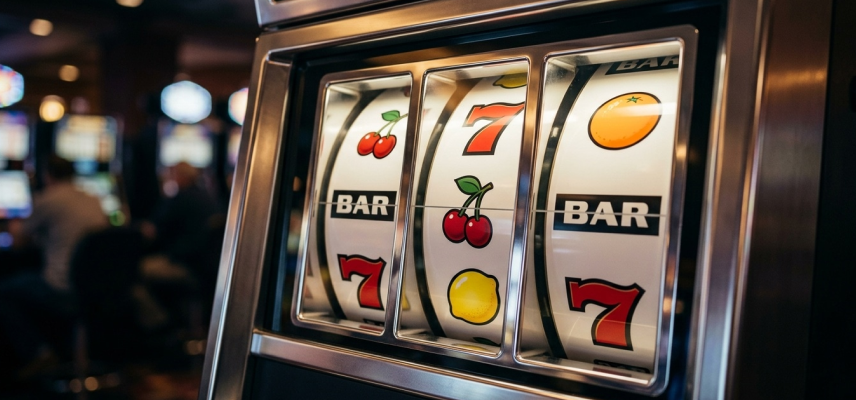
There are several different statistics that appear beside each other on slot information pages, but they all describe different parts of the game.
| Metric | What It Tells You | What It Does Not Tell You |
| Volatility | How payouts tend to be distributed between smaller, more frequent results and larger rare wins | What your next spin will produce |
| Variance | The spread of possible outcomes, often used interchangeably with volatility in slot terminology | A guaranteed pattern during one session |
| RTP | The theoretical percentage of wagers returned through the long-term mathematical model | How much of your own deposit will be returned |
| Hit Frequency | How often a spin produces a result counted as a win, on average | The size of those potential winnings |
The return to player rate, or RTP, needs a bit more of an explanation. If a slot has a 96% RTP rate, for example, that does not mean wagering $100 should leave you with $96 in your account balance. Instead, the percentage represents theoretical performance across a very large number of rounds.
Volatility answers a different question, which is: How is that theoretical return distributed? Two 96% RTP slots could therefore create very different sessions, if the volatility between the games is different.
How to Determine a Game’s Volatility Yourself
There are a few details that players should look for when trying to determine the volatility of an online casino slot, although none should be treated as proof on its own:
Analyse the Paytable Gap
Looking at the distance between ordinary payouts and the game’s top combinations can give you an idea of how volatile a title is. If low-value symbol combinations mostly return around the original stake size, while premium symbols jump sharply at higher matches, this leans towards the game being highly volatile.
Max Win Multipliers
A huge ceiling shows that the mathematical model permits a large result, but it does not reveal how much of the RTP is allocated to reaching it. Again, higher maximum potential winnings for a slot could point to a higher level of volatility, but the headline multiplier alone is not enough to determine variance.
Bonus Feature Frequency
Look at how much of the game’s strongest payout potential depends on reaching a feature. If the base game contains modest payouts while free spins unlock multipliers or access to the largest combinations, the bonus may carry most of the game’s potential. A rare trigger can then create a major difference between sessions that reach the feature and sessions that do not.
Some developers publish feature probabilities alongside their game information, and if present, those figures provide more details than the maximum multiplier alone.
Do not estimate volatility from a short personal sample, either, as fifty losing spins do not prove a slot is highly volatile, just as several quick wins do not prove it is low volatility.
Modern Trends: Why Are Games Getting More Volatile?
Look through current popular casino games ontario, and you will see mechanics capable of producing more uneven payout distributions than traditional fixed-payline slots.
Higher maximum-win ceilings are part of the shift, as developers also use accumulating multipliers and bonus modes where a rare feature can account for an unusually large result.
Some of the most recent releases show how far this segment has moved. Gates of Olympus Super Scatter offers maximum-win potential of 50,000x the stake size, for example, while Nolimit City has also released games with five-figure stake multipliers attached to extremely volatile models.
That does not mean all modern slots are becoming higher variance. Lower-volatility titles remain available, but the change is the visibility of games designed around large multipliers and rare payouts that revolve around the main feature being triggered.
Bankroll Strategy: Match Your Budget to the Machine
Before opening any of our casino games ontario, decide how much you are prepared to spend for entertainment. Volatility should influence the size of each wager inside that limit, never justify increasing the limit itself.
You can use a simple spin count calculation to plan your session, in line with your preferences:
| Example Budget | Stake Per Spin | Spins Represented by the Budget | Volatility Consideration |
| $20 | $0.20 | 100 | More room to absorb balance movement |
| $20 | $0.50 | 40 | Fewer spins before the full original budget is wagered |
| $50 | $0.25 | 200 | Greater spin capacity for higher variance |
| $50 | $1.00 | 50 | Large stake relative to the budget |
These figures are not predictions of session length because winning spins can return money to the balance. They simply show how quickly the original budget can be wagered.
For high-volatility play, reducing the stake gives the bankroll more opportunities to withstand losing sequences. With low volatility, balance movement may be less severe on average, but that does not justify increasing stakes because the game appears safer.
Due to this, it’s important that players set the limit first for their session, before choosing the game afterwards.
Players looking for a different format can also browse our online casino ontario or live casino ontario, where the underlying game structures differ from slots.
Frequently Asked Questions About Volatility
1 Can a low-volatility slot still lose many spins in a row?
Yes, low volatility describes how the game awards payouts in the long run, not a rule forcing wins to appear every few spins. A random sequence can still contain an extended losing run.
2 Does high volatility mean a slot has a lower RTP?
No, RTP and volatility measure separate characteristics. A high-volatility game can have a higher RTP than a low-volatility game, or the reverse, so check each statistic independently.
3 Can I change the volatility by changing my bet?
Usually, changing the standard stake alters the monetary value of each possible result rather than changing the underlying volatility model. With that being said, some slots may change the volatility for different bets, so be sure to check before committing.
4 Are high-volatility slots better for winning large amounts?
No, high-volatility slots do not make a large win likely during your particular session, but these types of slots do generally place more payout potential into large, less frequent outcomes. Higher volatility also does not mean better long-term value.
5 How do I find volatility information at ToonieBet?
Open the slot and check its rules or paytable, while provider information can help if the game does not display a clear rating. Our online slots catalogue also lets you explore individual titles and use demo modes where available. Demo play can help you understand how a game works without staking real money, although a short demo session cannot establish its true volatility.
6 What is the best volatility for a limited budget?
There is no volatility level that makes gambling profitable or guarantees a fixed session length. Lower-volatility games generally concentrate more returns into smaller, more frequent payouts, so balance movement may be less severe than with high-volatility alternatives. Stake size remains important, too, as a lower bet will allow players to go through more spins using the same initial bankroll.
The content is provided for general informational and entertainment purposes only and does not constitute betting advice, financial advice, or a recommendation to place any wager. Odds are subject to change. Sports wagering involves risk, and there is no guarantee of success or profit. For Ontario residents, participation in regulated online gaming is restricted to individuals 19 years of age or older. Please play responsibly. If gambling is no longer fun or may be causing harm, support is available through recognized gambling resources like ConnexOntario. Terms and conditions apply where applicable.
